All In on AI? How CFOs can shape the change a business needs.
Key takeaways from this blog:
- Start small and deliver quick wins
- Show progress to convince wider teams
- CFOs and other functions should lead projects
- Involve the team in identifying process improvements
Businesses across the UK and Ireland are hearing the same message from boards and senior leadership: “what are we doing about AI?” It’s tempting to go all in, but the consensus from lively talks at Future Fit Finance was that small steps and quick wins can unlock large-scale, organisation-wide transformation.
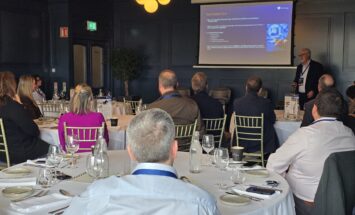
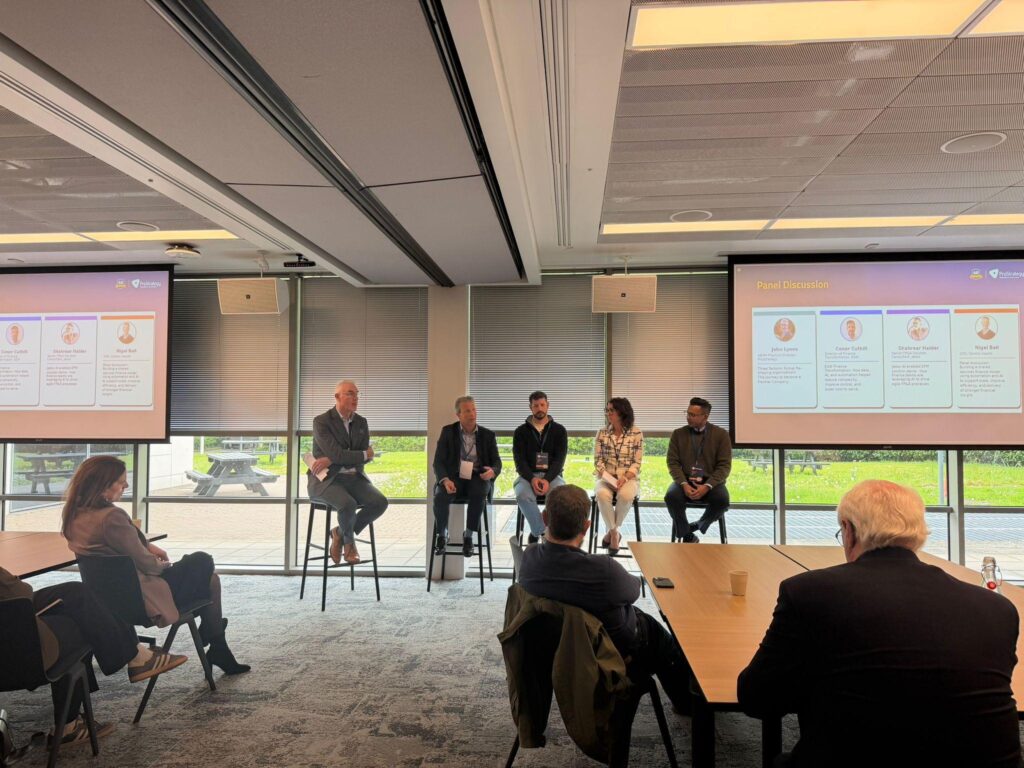
Future Fit Finance is ProStrategy’s finance leaders community that runs events every six months, where participants share with their peers the journeys they’re taking to build a finance function that’s ready for whatever challenges the future may hold.
Too often, projects never get off the launchpad while teams wait for the perfect conditions or targets to achieve. Instead, sometimes it’s better just to start. That’s the experience of Conor Cuthill, Director of Finance Transformation at ESW.

Start, and deliver wins early
Although everyone’s experience may vary, there are some lessons that are common to all. And one of those lessons is, get started. Rapid projects that prove their worth by delivering value fast, win support from all stakeholders and lay the groundwork for longer lasting change, Conor said. “We started small and proved value, and that created momentum.”
We started small and proved value, and that created momentum.
ESW is a direct-to-consumer business that partners with large brands like Nike to manage their e-commerce and fulfilment operations. The Irish company was founded in 2011 as eShopWorld, and has grown rapidly since the start of this decade. Revenues before the Covid-19 pandemic were €300 million; less than 36 months later, sales had boomed to over €1 billion.
Data was one of our biggest challenges. It was everywhere.
Despite the growth, the finance function was still managing millions of transactions using Excel. ESW estimated that around 40% of accountants’ time was spent gathering and checking data. “Data was one of our biggest challenges. It was everywhere,” Conor said.
Targeted automation reduces manual effort
To create efficiencies and streamline the data it was using to run its operations, ESW implemented an ERP system. Over a two-year period, it also got various teams involved in identifying redundant or unnecessary steps in some of its workflows and automate them. This reduced the cost to serve customers by 30%. In another process redesign exercise, ESW removed 29% of steps – almost a third. Of the remaining steps, 89% were automated and now they run without human intervention. “That’s a huge proportion of manual work that doesn’t have to happen any more,” Conor said.
That’s a huge proportion of manual work that doesn’t have to happen any more.
Conor advised finance leaders to keep this thought in mind when looking at large transformation projects: Can you break it into parts? Do processes need automating or do they need to disappear?
This approach of delivering “iterative gains” when tackling large projects is crucial in winning hearts and minds in the wider organisation, Conor added. Rapid, early progress is vital in convincing sceptics and people who need persuading that new initiatives or changes to the way their work, will help them do their jobs more efficiently, whether that’s using data more effectively, or adopting AI.
How finance leaders can drive transformation
At times it’s necessary to push hard, he advised finance leaders. This is a journey that involves humans, and they need to be brought on the journey. Conor referred to initiatives where a team was able to demonstrate a 90% gain, but some were holding out for the final 10% rather than launching with a process that would already make their work easier.
I’m a firm believer that all these projects should be function-led. It should be you at the front of the bus.
Conor cited a statistic that 70% of projects face delays or cost overruns. In a clear message to CFOs, Conor said that projects tend to fail when they’re technology-first or they don’t meet the needs of the people who will be using the tools in their daily work. “I’m a firm believer that all these projects should be function-led. It should be you at the front of the bus.”

Start with the end in mind
Rebecca Newton, said that in her experience there’s a balance to seek between CEOs who “want this shiny new Copilot” and those teams at the coalface who are left to figure out how use the AI tool, get value from it, and show return on investment. It’s tempting to dive right in because AI promises speed, and she advises starting with a goal in mind. “What are you trying to achieve? What’s the outcome? Start there and then work backwards.”
What are you trying to achieve? What’s the outcome? Start there and then work backwards.
Rebecca also agreed with Conor that a project’s success and uptake relies on a group of people who will take a new tool or process, work with it, and spread the positive word to their colleagues.
Find your super users, your champions within the business, that are both excited about it … and want to take this and invest in it as their own kind of personal project, but also to add value into the business.
She echoed Conor’s point in stressing the importance of taking action. “Actually, you can start anywhere. We tend to have conversations [with customers] around: where’s the biggest pain or the biggest opportunity?” For an AI tool to have value, ideally it should work with between three and five years’ worth of business data, she added.
Conor also said it was important to have a trusted partner to consult and advise on projects that could radically change how the business works. “You will need someone helping you with your blind spots. You won’t be able to do it all yourself. You need someone trusted who can map the journey.” These engagements don’t need to be long or continuous, just at certain points in time, he added.
You will need someone helping you with your blind spots. You won’t be able to do it all yourself. You need someone trusted who can map the journey.
In the next blog in the series, we’ll hear from some of the other speakers at the event, including Centric Health CFO Nigel Bell and Shahrear Haider, Senior FP&A Solution Consultant at Jedox. We’ll look at using automation and AI to support a business as it scales, and how finance teams can use AI to take a different approach to planning, forecasting, and reporting. Stay tuned.

Be the first to know
Get access to our webinars, whitepapers and case studies. You'll be notified when they are ready to freely view and download:
"*" indicates required fields