How would you describe the relationship with your technology provider?
Do you defer to their expertise and experience for key decisions about the systems that run your business? Do you only go to them when there’s a pressing issue? Or is there solid trust that they will steer you in the right direction based on your unique business needs?
The question is inspired by recently learning about a business that had upgraded from Microsoft Dynamics NAV to Business Central. That’s a very common scenario. Often, it’s an easy decision to stay with the provider that implemented the previous system. Maybe there’s a personal connection: someone on the provider’s team that the management gets along well with. Or maybe it’s because the partner knows the customer’s business because the relationship has lasted a long time.
In the example we’re thinking about, a company chose to work with its previous technology supplier for the upgrade because that provider had customised the previous system over the years. The feeling was, they know the business, it makes sense to lean on that accumulated knowledge rather than starting again with a different company. However, when the time came to change, the customer preferred to use the newer system out of the box as much as possible.


What happened next shows why solid partnerships are so valuable.
Although Business Central provides substantial functionality out of the box, it still needs to be configured around the way the business operates. That may include adapting processes, configuring the system appropriately and introducing additional applications or extensions where there is a genuine requirement. In this case, the original implementation went so badly that staff no longer had sufficient visibility of goods in the system, severely affecting the company’s ability to serve its customers. The customer’s team had to find workarounds, often requiring employees to work overtime.
The value of a proactive partner and tailored advice
Not surprisingly, the business regretted the decision. Reflecting later, the leadership felt that the provider should have been more proactive in guiding the project and advising on what the new solution needed to do. The consultancy could have applied what it knew about that customer’s business, and about the capabilities of Business Central, and joined the dots between the two.
The customer rightly felt that they weren’t the IT experts. They had put their trust in their IT provider, and because the partner didn’t push back or challenge them during the implementation phase, they had no reason to think there would be any unforeseen issues at go-live. The client trusted the partner’s judgement and felt it was capable of steering them in the right direction.
It was a costly lesson for the client: ERP is about so much more than just an IT upgrade. A new ERP system won’t fix broken or poorly understood processes on its own. The project needs to consider finance, operations, inventory and customer service together, otherwise a business can end up reproducing its existing problems in a newer system.

Effective ERP modernisation starts with understanding how the business needs to operate: how information should move between teams; where greater visibility is needed; which processes can be simplified; and who needs to make key decisions.
We would argue that a good partner draws on their experience to work with the client and carry out the necessary due diligence before the project starts, to highlight any gaps or spot opportunities to streamline some business processes and workflows.
When communication is fragmented, outcomes suffer
Communication was another challenge. Much of the engagement took place virtually, without enough opportunity for the right people to work through the more complex requirements together. Questions frequently had to be relayed to colleagues outside the meeting, increasing the risk that important context would be lost.
Virtual communication can work well, but sometimes both sides need to sit face to face and talk. ERP is a critical business system, and the cost of a poor implementation is too high to skip this important step, especially at the beginning.


Fortunately, the story had a different and more positive ending. While contacting customers to apologise for the interrupted service, the company’s leadership learned that this experience was surprisingly common. One of those conversations with a peer led to recommending a different partner. Within months, the business was back on its feet and seeing the benefits of the system after the initial false start. (Full disclosure: that new partner was ProStrategy.)
In the subsequent project, the customer’s leadership was impressed by the time we invested in understanding the company’s challenges. Before costs were discussed, we held several meetings and then produced a detailed proposal outlining our recommended approach. This allowed us to identify the right Business Central solution and agree how it should be configured around the company’s requirements.
Why engagement is key to ERP success
In our opinion, this highlights an often overlooked part of any ERP engagement. The customer needs to be ready to dedicate time and resources to making it work. Their feedback and interaction are critical.
Ideally, a positive, well-functioning customer-supplier relationship is a marriage of equals where both sides contribute fairly and bring the best out of each other.
It’s a serious commitment on both sides, and it’s why we always stress the importance of good communication from the very start of the engagement. It might be a cliché to say the best relationships are built on good communication, but it’s also true.

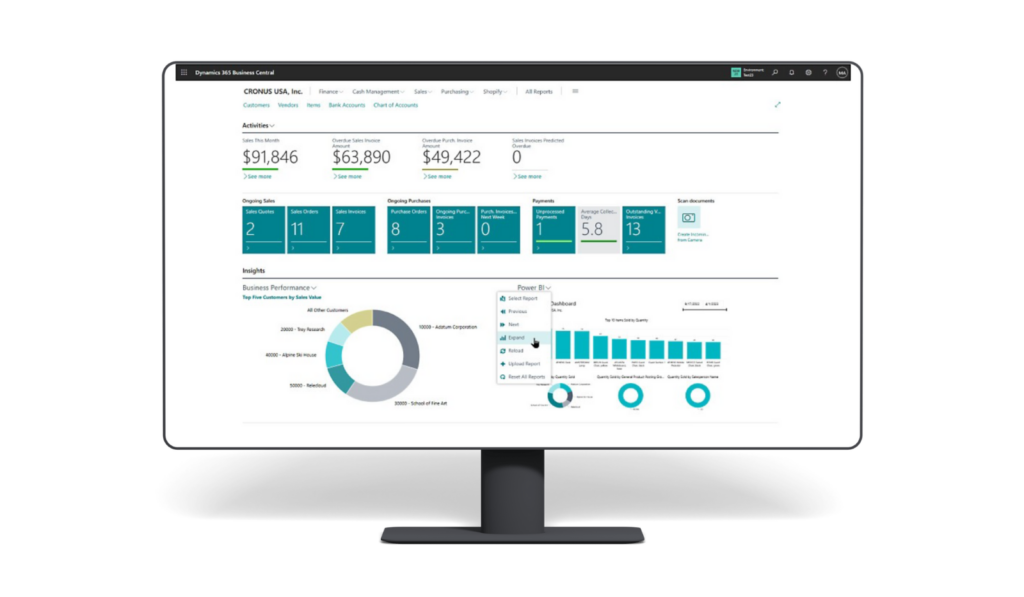
This doesn’t get talked about enough in ERP implementations: human engagement is as important as the software itself. The road to failed projects is paved with decisions to ‘save’ costs by skipping proper design and workshops. In reality, those steps are fundamental, even though they ask a lot of the business because it means allocating the best people to the project.
As we wrote in a recent blog, there’s also a strong argument for appointing a dedicated internal change manager to shepherd the project through to completion, acting as a go-between to liaise with the external ERP partner and various teams within the business. This can be either an internal appointment or someone recruited specifically for the role, and it’s noticeable that increasing numbers of clients are realising how this position contributes to successful ERP implementations.
At heart, it all comes back to good communication and a relationship-based approach. At ProStrategy, we make a point of developing strong relationships with our clients. Experience has shown us that the best outcomes emerge when both sides are committed to the same objectives and share responsibility for making the project successful. When success looks the same for everyone involved, the business is in a much stronger position to realise the value of its investment.
Be the first to know
Get access to our webinars, whitepapers and case studies. You'll be notified when they are ready to freely view and download:
"*" indicates required fields